

Blog
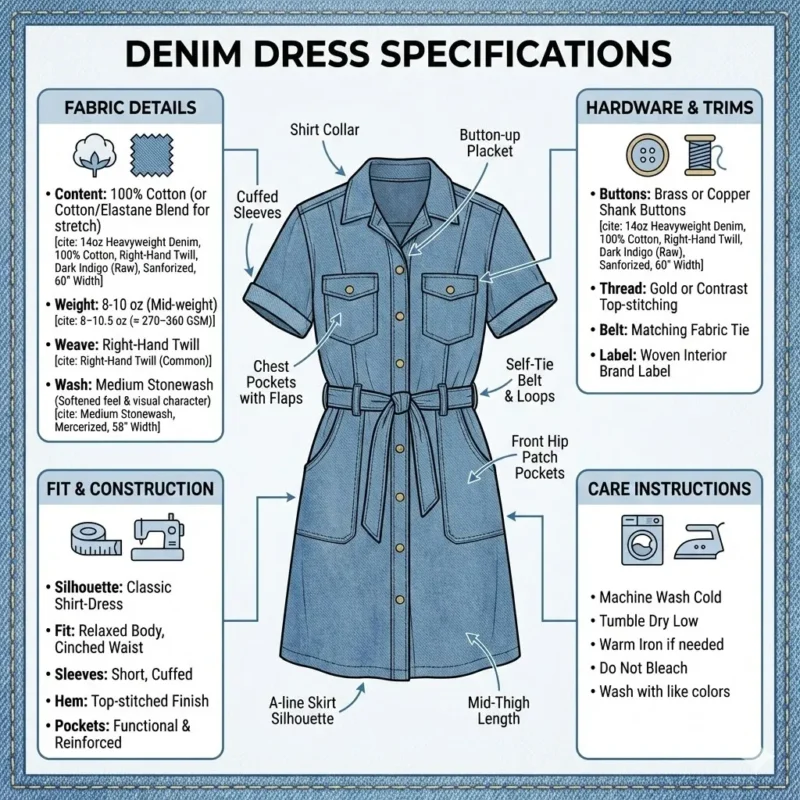
Denim Dress Specifications
(Drape + Comfort + Opacity + Panel Matching)
👗 Why Dresses Are Different
Denim dress fabric specifications are different from jeans or jackets because dresses live or die on drape + comfort + opacity + panel matching.
A dress can “look right” on a hanger and still fail in bulk because:
- The bodice and skirt don’t match shade.
- The hem twists after wash.
- The fabric clings when it’s hot.
✅ A Spec-First, Factory-Friendly Guide
Below is a spec-first, factory-friendly guide. Every section ends with “Which denim dress styles this fits + the recommended spec ranges” so you can turn knowledge directly into a purchase order.
Denim Dress Fabric Specifications
1) Everyday Retail Denim Dress (Balanced Drape + Opacity)
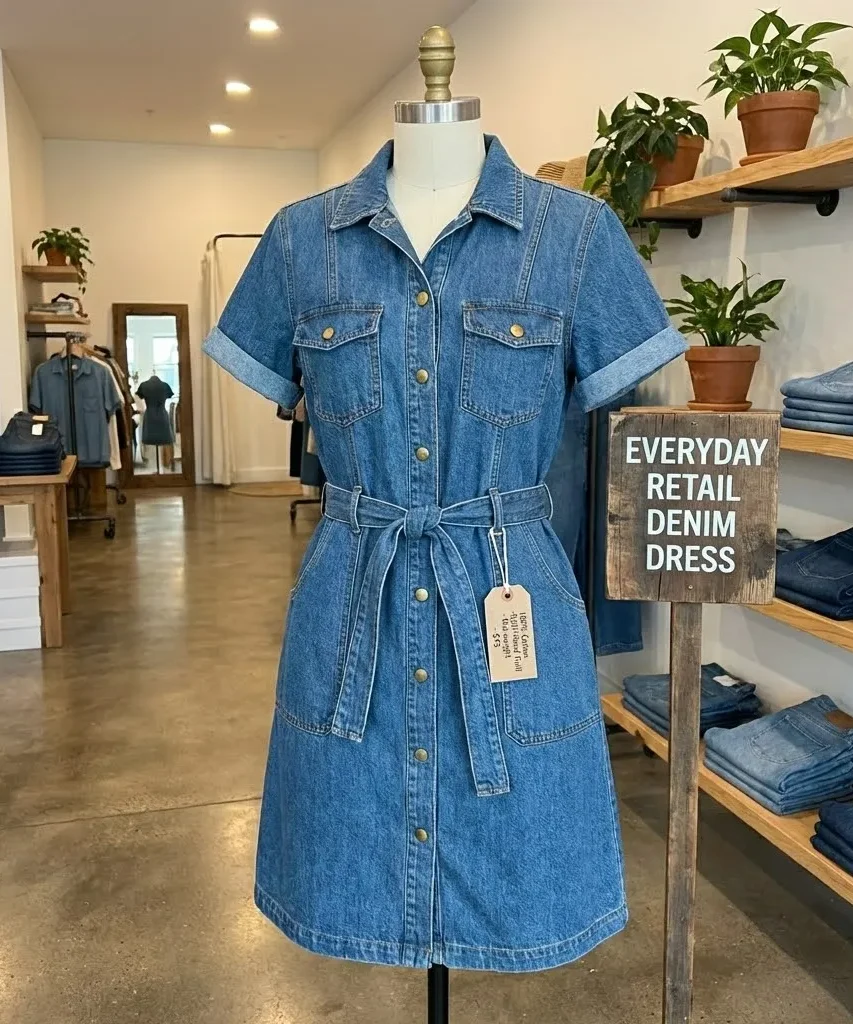
🧥 Best for: Shirt dress, A-line, fit-and-flare (unlined or lightly lined)
- Fiber:
100% cotton or cotton/lyocell blend (for softer drape) - Weave:
2/1 twill (drape-forward) - Weight:
5.5–7.0 oz (≈ 185–240 GSM) - Cuttable Width:
150–160 cm (confirm cuttable, not just nominal) - Yarn Count:
Typically warp/weft ~ 10–20 Ne depending on handfeel - Dye Route:
Indigo warp dyed (rope or sheet) - Finish:
Sanforized + controlled softener/enzyme window - QC Targets:
Crocking (specify dry/wet); Shrink target (set by wash baseline)
2) Summer Lightweight Denim Dress (Breathable + Not Sheer)
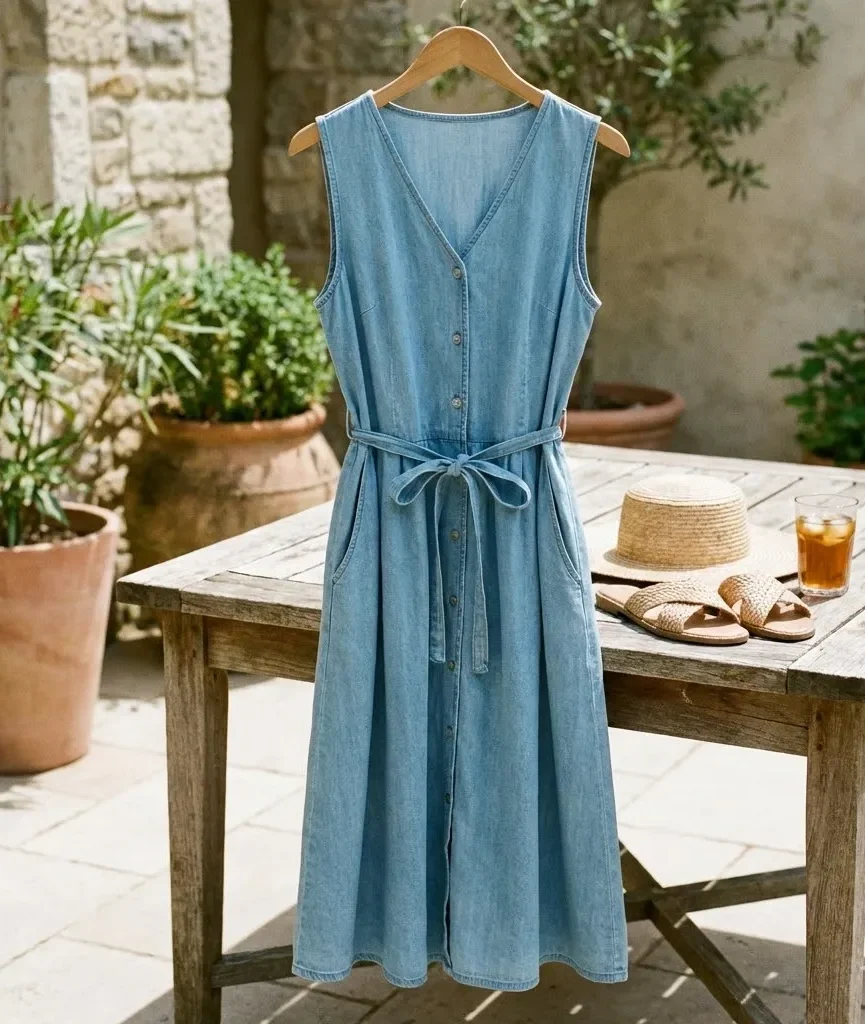
☀️ Best for: Summer shirt dress, tiered dress, loose fit-and-flare
- Fiber:
Cotton/lyocell (cooling + drape) or cotton with lighter structure - Weave:
Chambray or 2/1 twill - Weight:
3.8–5.5 oz (≈ 130–185 GSM) - Width:
150–160 cm cuttable preferred (helps coverage + marker efficiency) - Finish:
Soft handfeel but pilling controlled; avoid “over-softening” (clings) - Opacity:
Achieved via density + lining decision, not weight alone
3) Fitted / Bodycon Denim Dress (Recovery + Anti-Growth)
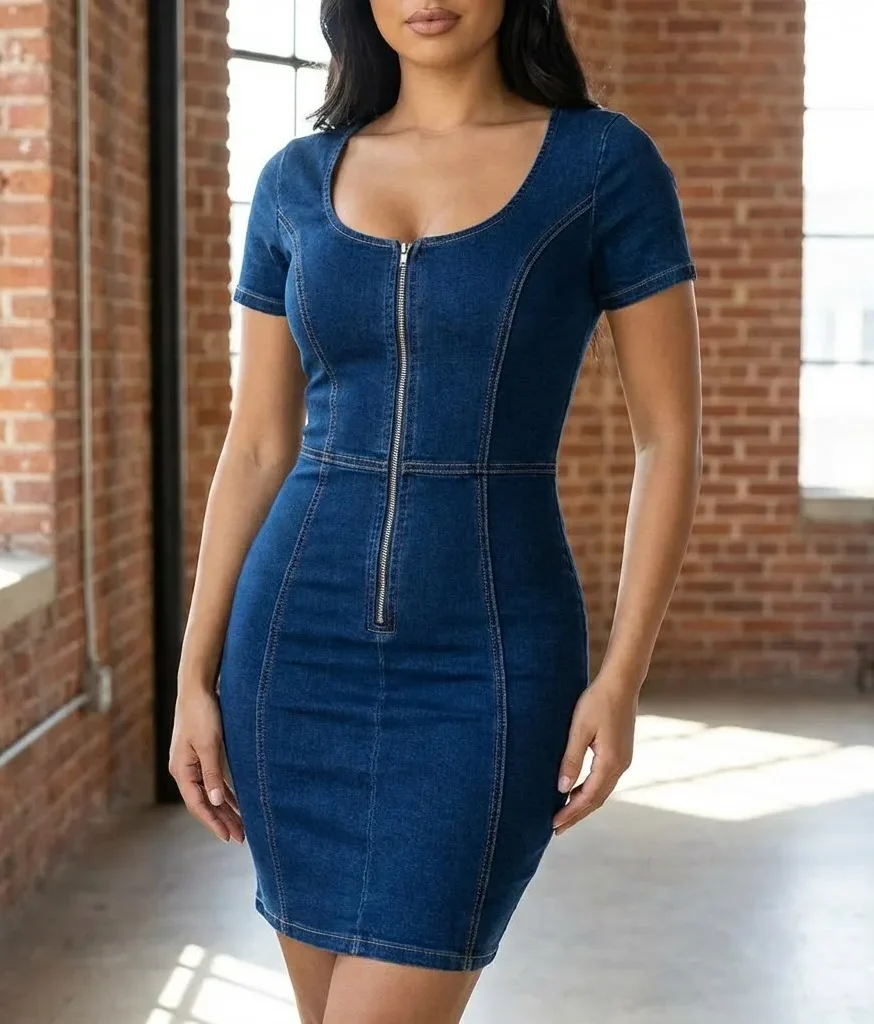
💃 Best for: Fitted sheath, zipper-back, bodycon
- Fiber:
Cotton + Elastane (or similar stretch) + optional Poly for stability - Weave:
2/1 or stable twill; avoid overly loose constructions - Weight:
6.0–8.0 oz (≈ 200–270 GSM) - Stretch Rules:
Write targets for stretch, recovery, and growth (anti-bagging) - Finish:
Controlled; avoid aggressive enzymes that weaken seam zones
4) Structured Utility Denim Dress (Crisp Silhouette + Durability)
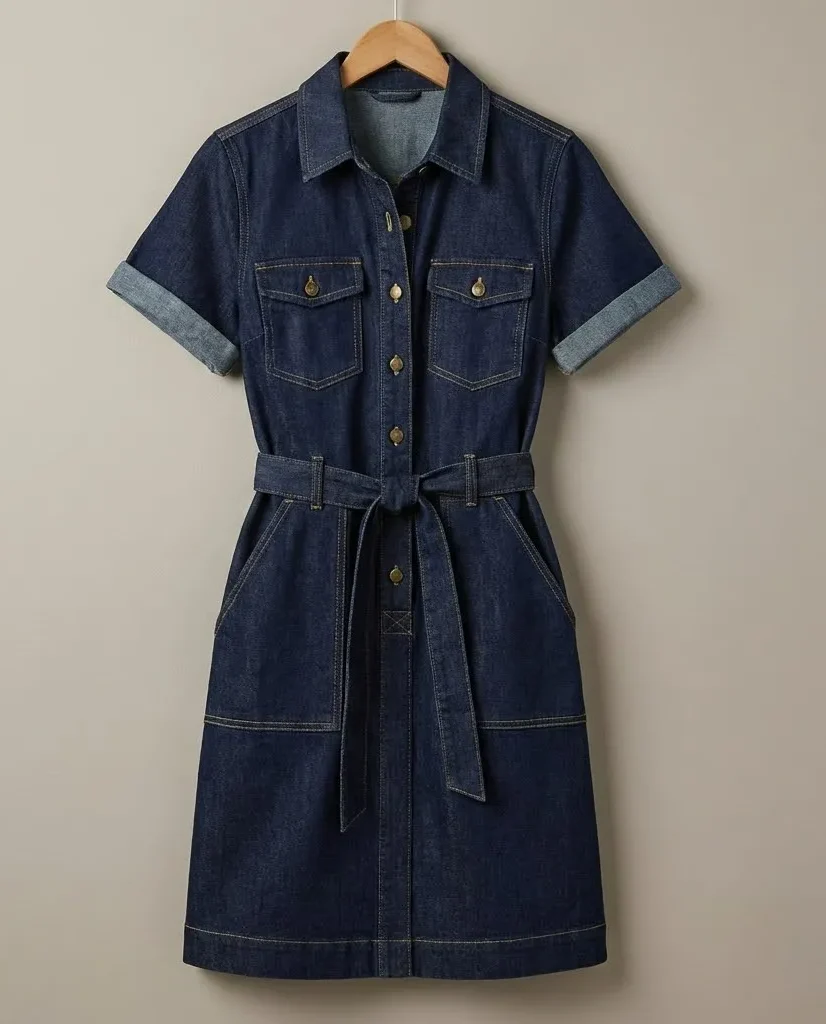
🛠️ Best for: Utility dress, belted shirt dress, pinafore/overall dress
- Fiber:
100% cotton or cotton/poly (for stability) - Weave:
3/1 twill (structure-forward) - Weight:
7.0–10.0 oz (≈ 240–340 GSM) - Width:
Confirm cuttable; symmetry panels must be shade-controlled - Finish:
Sanforized; optional light resin only if you accept “break-in” stiffness
1) Fiber Composition Ratios: Which Fiber Fits Which Denim Dress
Fiber choice is your first “fork in the road.” It sets the ceiling on drape, cooling, shrink behavior, and how much the dress will change after washing.
1.1 100% Cotton: Best for Structure, Not Always Best for Comfort
- Shirt dress / utility dress where shape matters
- Belted styles where the waist needs fabric “memory”
- A-line when you want crisp swing rather than soft drape
- Classic denim look; clean aging and wear character
- Better “snap” and silhouette support at placket and collar
- Strong base for structured topstitching aesthetics
- Can feel stiff on bare skin if finishing is not tuned
- Shrink and hem distortion risk can be higher if not sanforized
- Can cling or feel hot in summer if density is high
📋 Dress Match Recipes (Cotton)
| Dress type | Recommended fiber | Weave | Weight | Cuttable width | Yarn direction |
|---|---|---|---|---|---|
| Utility / belted shirt dress | 100% cotton | 3/1 twill | 7–10 oz (240–340 GSM) | 150–160 cm | mid counts (structure) |
| Crisp A-line | 100% cotton | 2/1 or light 3/1 | 6–8 oz (200–270 GSM) | 150–160 cm | mid counts |
| Overshirt-style dress | 100% cotton | 3/1 | 7.5–10 oz | 150–160 cm | coarser counts OK |
1.2 Cotton + Lyocell (Tencel): The Drape & Cooling Upgrade
- Summer dresses where breathability and softness dominate
- Fit-and-flare / tiered dresses where drape makes the silhouette
- “Office casual” dresses where comfort matters more than hard structure
- Noticeably softer, cooler, and drapier than typical 100% cotton denim
- Often reduces the “scratchy collar/cuff” complaint in shirt dresses
- Helps the dress move (swing) instead of standing stiff
- Can increase seam sensitivity (seam slippage risk if construction is weak)
- If over-softened, can become clingy or “too fluid,” losing shape at waist seams
- Abrasion in high-rub zones (hip, underarm) needs attention
📋 Dress Match Recipes (Cotton/Lyocell)
| Dress type | Recommended fiber ratio | Weave | Weight | Cuttable width | Notes |
|---|---|---|---|---|---|
| Summer shirt dress | Cotton/Lyocell blend | chambray or 2/1 | 3.8–5.5 oz | 150–160 cm | prioritize “cool handfeel” |
| Fit-and-flare | Cotton/Lyocell | 2/1 twill | 5–7 oz | 150–160 cm | drape-forward |
| Loose A-line | Cotton/Lyocell | 2/1 | 5.5–7.5 oz | 150–160 cm | opacity check required |
1.3 Cotton + Polyester: Stability, Easy Care, Travel-Friendly
- Commuter / travel denim dresses where wrinkle and shape stability matters
- Lined dresses where you want consistent size through laundry cycles
- Kids/fast-fashion where stability and cost matter
- Better dimensional stability in many bulk programs
- Faster drying; often less wrinkle-prone
- Can reduce “shape collapse” in soft dress constructions
- May reduce authentic fade character (if that matters to your brand)
- Handfeel can turn “plastic-y” if finishing isn’t tuned
- Some buyers dislike the aesthetic aging vs pure cotton
📋 Dress Match Recipes (Cotton/Poly)
| Dress type | Fiber goal | Weave | Weight | Width | Why it works |
|---|---|---|---|---|---|
| Office casual / travel | cotton/poly blend | 2/1 twill | 5.5–7.5 oz | 150–160 cm | stability + easy care |
| Lined dress | cotton/poly | 2/1 | 6–8 oz | 150–160 cm | consistent fit |
1.4 Stretch Blends: Only for Fitted Dresses (and Write Anti-Growth Rules)
Stretch is not automatically “better.” For flowy dresses, stretch often kills drape and creates cling. For fitted dresses, stretch is usually necessary—but only if you control recovery and growth.
- Bodycon / fitted sheath
- Zip-back / tailored fit
- High-waist fitted silhouettes
- Comfort and movement without sizing up
- Better fit retention if recovery is engineered correctly
- Can reduce customer returns for “too tight to sit”
- If poorly engineered: growth (bagging) at hip/seat and “fit drift”
- Can cause seam grin or distortion at zipper seams
- Recovery inconsistency between lots is a common bulk issue
📋 Dress Match Recipes (Stretch)
| Dress type | Fiber | Weave | Weight | Width | Must-write rules |
|---|---|---|---|---|---|
| Fitted sheath | cotton + elastane (+ optional poly) | stable twill | 6–8 oz | 150–160 cm | stretch + recovery + growth targets |
| Bodycon | cotton + elastane | stable twill | 6.5–8.5 oz | 150–160 cm | anti-bagging focus |
2) Weave & Structure: Pick the “Drape Engine” for Your Dress
Denim is defined by twill structure and warp-faced appearance. For dresses, structure is about swing vs stiffness, and whether the dress “hangs” or “stands.”
2.2 Chambray vs Denim Twill: Cooler Feel vs Classic Denim Face
Chambray is often a smarter “denim-look” choice for summer dresses because it breathes and drapes differently than heavier twill.
👗 Best matches:
- Chambray: summer shirt dress, tiered dress, loose silhouettes
- Denim twill: structured shirt dress, belted utility styles
2.3 Right-hand vs Left-hand Twill: Softness, Fuzz, and Rubbing Transfer
In practice, this affects surface feel and sometimes how quickly the fabric softens.
📝 Buyer-facing guidance:
If the dress is unlined and touches skin, prioritize constructions that don’t feel overly fuzzy or abrasive at high-contact areas (neckline, armholes, waist seam).
2.4 Slub / Crosshatch: Premium Texture vs Defect Disputes
Texture sells—until it becomes a “defect argument.”
📝 How to write it as an enforceable PO line:
- Define the intent: “intentional slub/crosshatch texture is acceptable”
- Define unacceptable extremes: “no visible barre, no hard weft streaks, no stop marks beyond agreed reference”
- Approve against a bulk cuttable reference (not just a swatch)
When you discuss “defects” or acceptance language, refer to internal standards.
3) Fabric Weight (oz/GSM): After You Explain It, Tie It to Dress Types
Weight is not just “thickness.” In dresses, weight is a silhouette control knob.
Dress Match Recipes (Weight → Dress Type)
| Dress type | Recommended weight | Weave | Fiber suggestion |
|---|---|---|---|
| Summer loose | 3.8–5.5 oz (130–185 GSM) | chambray / 2/1 twill | cotton/lyocell |
| A-line / flare | 5.5–7.5 oz (185–255 GSM) | 2/1 twill | cotton or cotton/lyocell |
| Shirt dress (classic) | 6–8 oz (200–270 GSM) | 2/1 twill or light 3/1 twill | cotton or cotton/poly |
| Utility / belted | 7–10 oz (240–340 GSM) | 3/1 twill | cotton or cotton/poly |
| Fitted | 6–8 oz (200–270 GSM) | stable twill | stretch blend |
Factory Experience (Weight-Related Case): “Ultra-Light Indigo Denim” That Backfired — Then Got Fixed
A buyer once insisted on using a very low-weight rope-dyed indigo denim for a summer denim dress. Their logic was simple: “Lower GSM = cooler dress = better sales.”
We warned them that weight alone doesn’t guarantee comfort—and that too-low weight usually triggers opacity, panel show-through, and a ‘cheap’ feel under store lighting. They wouldn’t budge. So we did it their way first—and used the sample to let reality do the convincing.
🛠️ What we did (even though we disagreed)
We didn’t argue forever. We moved it into a controlled sampling process:
- Risk Note: Wrote “opacity risk + thin handfeel risk” directly on the tech pack.
- Exact Exec: Produced fabric exactly to their requested GSM (no “quiet upgrades”).
- Full Sample: Made a full dress proto (not just a swatch) to reveal bodice/skirt behavior.
- Internal Checks: Ran light-box opacity checks and drape tests before shipping.
📢 Their feedback (and it was blunt)
When the buyer received the sample, the reality hit:
- “It’s too thin.”
- “Under light you can see too much—this won’t work for a denim dress.”
- “The skirt doesn’t feel ‘denim’—it feels like a shirt fabric.”
Instead of debating opinions, we had a physical sample proving the risk.
The Fix: We Rebuilt the Weight Spec Around the Dress Type
We asked one question: “What’s the selling promise: cool + airy, or denim look + confidence?”
They wanted: summer comfort, but still a real denim dress look and not sheer.
🔄 What we changed internally (to ensure reliability)
- Tightened Tolerances: Restricted weight tolerance so bulk wouldn’t drift light.
- Shade Consistency: Kept the same shade reference to avoid color surprises.
- Re-Check: Repeated the light-box check before shipping sample #2.
- Clear Note: Included a note: “This GSM band is chosen specifically for unlined denim dresses to balance breathability and opacity.”
🎉 Outcome: The Second Sample Landed Perfectly
“This is exactly what we meant. It finally feels like a denim dress—not too thin.”
We didn’t “win an argument.” We protected their product (and our factory’s rework risk) by letting sampling settle the debate.
4) Width & Cuttable Width: Dresses Are Yardage Hogs
For denim dresses, width impacts cost more than many buyers expect—especially long skirts and flare silhouettes.
Dress Match Recipes (Width)
| Dress type | Recommended cuttable width | Why |
|---|---|---|
| Flare / maxi | 150–160 cm | reduces consumption and seam paneling |
| Shirt dress | 145–160 cm | marker efficiency + symmetry panels |
| Fitted | 145–155 cm | stable cutting, less waste variability |
| Pinafore / overall | 150–160 cm | straps + skirt panels benefit |
5) Yarn Count & Spinning Method: Comfort on Skin Starts Here
When you introduce yarn count concepts, refer to internal standards regarding yarn specifications.
5.2 Ring-Spun vs Open-End: Which Fits Which Denim Dress
- unlined dresses touching skin
- “premium comfort” positioning
- utility dresses
- value-focused programs
…but you must manage surface feel and finishing consistency.
5.3 Combed/Compact Options: When They Reduce Irritation and Pilling
If your dress is unlined, worn in heat, or marketed as soft:
…then combed/compact choices can reduce scratchiness and improve consistency (especially at armholes and neckline).
Dress Match Recipes (Yarn Choice)
| Dress type | Yarn preference | Why |
|---|---|---|
| Summer unlined | smoother yarn choice favored | bare-skin comfort |
| Premium everyday | ring-spun favored | comfort + clean look |
| Utility | durability/cost balanced | structure-first |
6) Dyeing & Shade Control: Dresses Expose Panel Mismatch
Denim color behavior comes from warp dyeing and structure. For dresses, the #1 bulk complaint is often bodice vs skirt mismatch.
6.1 Rope-Dyed Indigo: Best Depth, Higher Rubbing-Transfer Risk
If you want classic character, rope-dyed indigo is common—but rubbing transfer (crocking) must be controlled. ISO 105-X12 defines a method to assess resistance of color to rubbing off and staining (dry and wet).
“Color fastness to rubbing: ISO 105-X12, dry and wet, tested after final finishing.”
6.2 Sulfur Black/Gray: Undertone Drift and Batch Rules
Black and gray denim can drift undertone (green/red cast). Don’t fight this with opinions—fight it with rules:
- Shade standard reference
- Lot control
- Bulk cuttable approval
6.3 Garment Dye / Overdye: Style-First, Higher Variance
Great for fashion. Risky for consistency. If you garment-dye a dress, you must tighten:
- Shade variance tolerances
- Shrink controls
- Trims/hardware compatibility
6.4 Shade Band + Cutting Rules (Dress-Specific)
Dress symmetry panels to watch:
- Bodice left/right
- Collar + collar stand (shirt dress)
- Skirt panels that sit adjacent on the front
“No shade band mixing within one garment. Bodice panels and adjacent skirt panels must be cut from the same shade band.”
When you discuss staining and rubbing, link internally to [Colorfastness Guide].
7) Breathability: You’re Selling Comfort, Not Just “Denim Look”
Breathability is driven by:
- Fiber: (lyocell helps cooling)
- Structure: (chambray can breathe better than dense twill)
- Density: (tight constructions trap heat)
- Finishing: (over-softening can create cling)
Dress Match Recipes (Breathability)
| Dress type | Breathability priority | Recommended choices |
|---|---|---|
| Summer loose | highest | chambray/2/1 twill + cotton/lyocell + lighter weight |
| Office everyday | medium | 2/1 twill + balanced weight + controlled softening |
| Fitted | medium | stable twill + stretch rules + avoid cling finishes |
8) Shrinkage & Skew Control: Dresses Show Distortion at the Hem
Dimensional change must be specified by a method and wash baseline. ISO 5077 specifies a method for determining dimensional change after washing and drying procedures.
8.1 What Shrink/Skew Does to Denim Dresses
Unlike jeans where leg twist is sometimes “authentic,” dress distortion kills the silhouette:
- Hem becomes uneven
- Side seams rotate (creating awkward drape)
- Waist seam shifts (misaligning bodice and skirt)
- Placket/collar can distort (ruining shirt dress symmetry)
8.2 How to Write Shrink Tolerances So They’re Enforceable
- Choose the test method: (ISO 5077).
- Define the baseline: Define the wash/dry procedure baseline (your real consumer-care route).
- Set limits: State warp/weft dimensional change limits tied to that baseline.
- Require reporting: Mandate reporting after finishing and after garment wash baseline (if garment washed).
8.3 Pre-Production Wash Validation (Buyer-Friendly Workflow)
Don’t wait for the full size run. Validate early:
- Cut a mini set: bodice panel, skirt panel, waistband/waist seam piece, neckline/armhole piece.
- Wash/dry: Process per your defined baseline.
- Measure: Check dimensional change and skew percentages.
- Hang & check: Hang the test dress panel set and check hem alignment visually.
- Approve: Only proceed when the visual distortion risk is acceptable.
When you explain distortion and defect prevention language, link internally to [Fabric Defects].
9) Abrasion & Durability: Dresses Aren’t Jeans, But They Have Hot Zones
Denim dresses don’t face knee abrasion like jeans, but they do face specific friction challenges.
🔥 Hot Zones for Dress Abrasion
- Underarm rub: (friction from movement)
- Hip/seat rub: (sitting and bag friction)
- Belt/strap rub: (waistbands and accessories)
- Hardware rub: (metal buckles on pinafores/overalls)
Dress Match Recipes (Durability Focus)
| Dress type | Risk zones | Spec emphasis |
|---|---|---|
| Pinafore/overall | straps + hardware points | abrasion + hardware compatibility |
| Utility belted | waist + pockets | seam durability + abrasion in waist zone |
| Summer loose | underarm + bag rub | pilling/crocking + comfort |
| Fitted | zipper/waist seams | seam stability + anti-growth |
Spec Recipes by Final Dress Type
Conclusion
Stop Arguing About “Feel” — Start Controlling Outcomes
When you treat denim dress fabric specifications as a checklist—fiber ratio, weave, weight, cuttable width, yarn strategy, dye route, comfort intent, shrink/skew rules, durability zones, and finishing windows—you stop arguing about subjective opinions and start controlling production outcomes.
⚠️ Why They Fail in Bulk
Denim dresses fail for predictable reasons:
- Bodice and skirt panels don’t match shade.
- Summer styles stain handbags (poor crocking control).
- Hems twist and distort after wash.
- “Soft” finishes collapse the silhouette.
✅ The Predictable Fix
Write dress-type matching rules directly into the PO:
- Demand bulk cuttable approval specifically for panel matching.
- Tie dimensional change to an actual method like ISO 5077.
- Use the specific spec recipes (A–E) defined above.
🚀 Strategic Next Step: Build a Hub
If you want the safest next step in your cluster, build a hub page called Denim Fabric Specification Sheet. Link every garment-specific spec page (like this one) back to it—then use only one sentence to cross-link between jeans, jacket, shirt, and dress pages to avoid keyword cannibalization.






 Pants – Normal
 Pants – Y2K
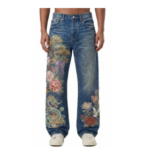 Pants – Street wear
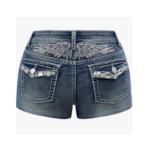 Shorts
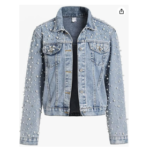 Coats – Normal
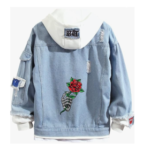 Coats – Y2K
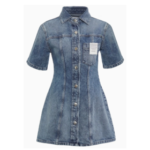 Dresses
 Accessories-Normal